





Service | St. Louis, MO
Check your tires before a summer road trip.
A road trip is one of the few times most drivers think hard about their tires before a problem forces the issue. That instinct is right. Tires do more work on a long highway drive at summer temperatures than they do on a typical week of local errands, and a small issue that’s easy to ignore around town becomes a real risk at highway speed in the heat.
Quick answer: Before a summer road trip, check tread depth, tire pressure including the spare, and look for any uneven wear or visible damage. Summer heat increases tire pressure and raises the risk of a blowout on tires that are already low on tread or underinflated.
Check
Tread depth and pressure
Look
Cracks and uneven wear
Match
The right size for your Ford
In this post
- Why Does Summer Heat Make Tire Condition More Important?
- How Do I Check Tread Depth Myself?
- Should I Rotate Tires Before a Long Trip?
- What Tire Pressure Should I Use in Summer?
- Does Tire Brand Matter as Much as People Assume?
- What Does the TPMS Warning Light Tell Me?
- Does a New Set of Tires Really Need a Break-In Period?
- Getting Checked Before You Go
Why Does Summer Heat Make Tire Condition More Important?
Heat causes air inside a tire to expand, and hot pavement adds even more heat on top of that from friction and ambient temperature. A tire that’s already low on tread or slightly underinflated has less margin to handle that added heat safely, which is exactly why blowouts spike during the hottest stretches of summer road trip season.
How Do I Check Tread Depth Myself?
The built-in wear bars molded into the tire itself are the simplest check. If tread has worn down close to level with those bars, it’s time for new tires before a long trip, not after you’re already a few hundred miles from home.
Find Tires
Schedule a Tire Check
Does the Spare Tire Matter If I Never Use It?
It matters more on a road trip than around town, precisely because you’re farther from help if something goes wrong. A spare that’s been sitting low on air for months isn’t ready to get you anywhere if you need it, so it’s worth checking before you leave, not discovering its condition on the shoulder of a highway.
Should I Rotate Tires Before a Long Trip?
It is one of those quick services that costs little and prevents a lot, since evening out wear before a long trip stretches the useful life of a set of tires you would otherwise replace sooner.
If you’re due or close to due for a rotation, doing it before rather than after a long trip helps even out wear before the added highway miles, extending overall tire life. It’s a quick service that pairs well with the rest of a pre-trip check.
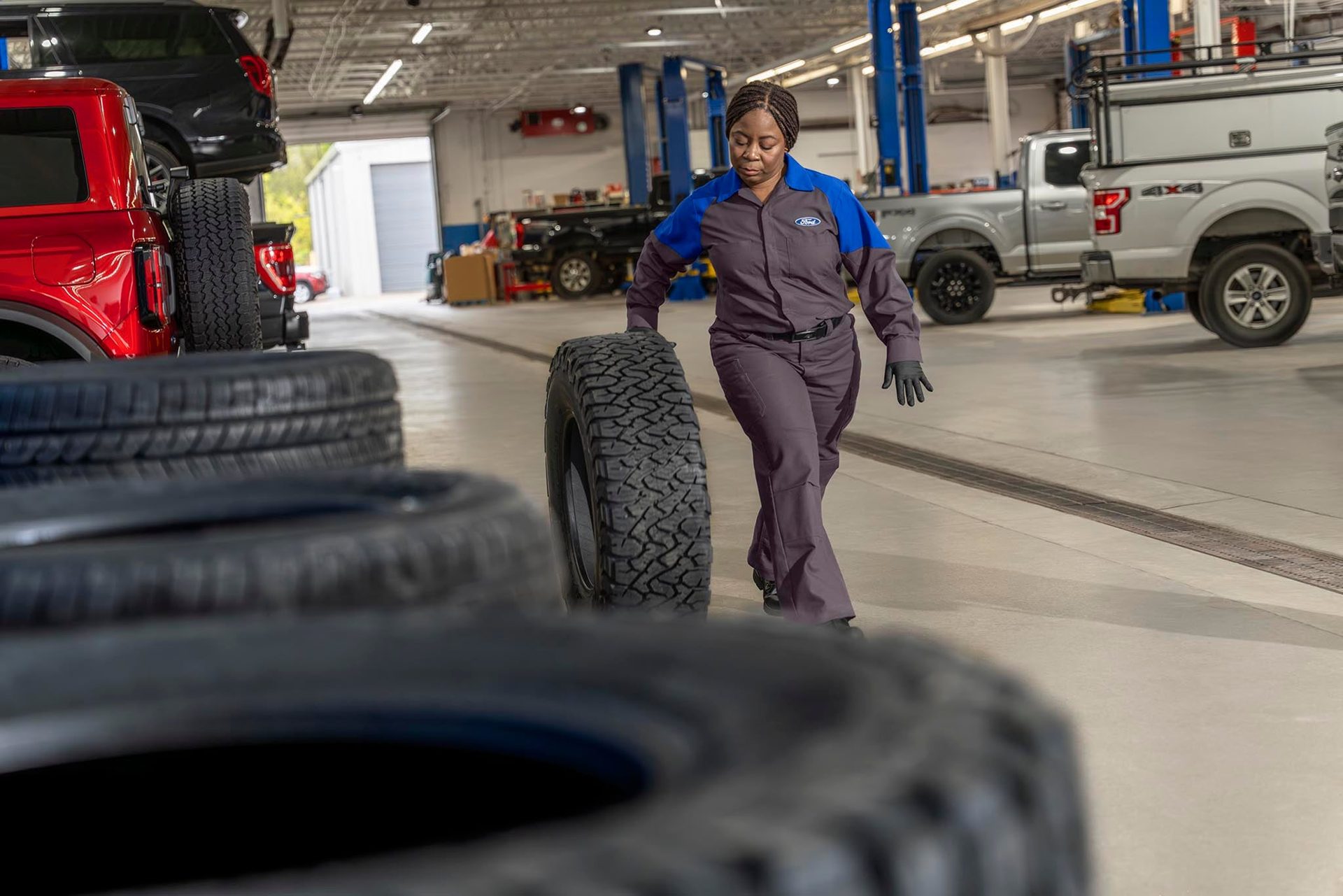
St. Louis driver tip: Hot pavement raises tire pressure and heat. Check pressure cold, before you drive.
What Tire Pressure Should I Use in Summer?
The door sticker number is correct for your vehicle regardless of season, even though it feels tempting to adjust it downward once the sidewall gets warm to the touch.
Use the pressure listed on the sticker inside your driver’s door, not the number printed on the tire’s sidewall, which represents the tire’s maximum rating rather than the correct pressure for your vehicle. Check it when tires are cold, ideally before driving, since heat from driving temporarily raises the reading.
Does Tire Brand Matter as Much as People Assume?
Reputable tire brands within a similar price tier tend to perform more similarly than marketing suggests, and the bigger factor for a road trip is matching the right tire category, all-season versus all-terrain, for example, to how you drive. Our tire finder tool can narrow down options matched to your specific Ford rather than leaving you to compare specs across dozens of brands on your own.
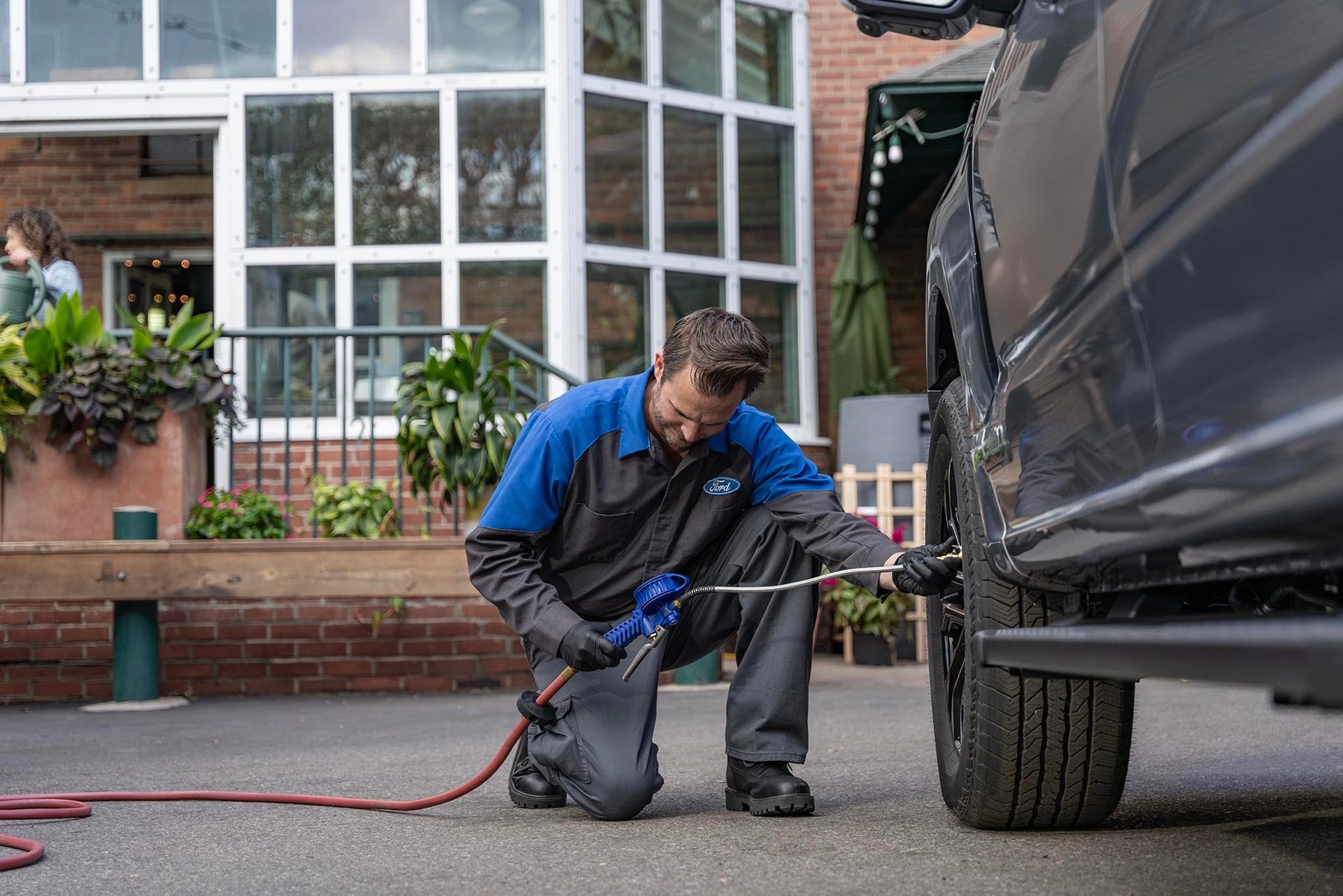
What Does the TPMS Warning Light Tell Me?
The tire pressure monitoring system light means at least one tire has dropped meaningfully below its recommended pressure, not that something is broken. It’s worth checking all four tires with a gauge rather than assuming which one triggered it, since a slow leak in one tire can sometimes cause a reading close enough to a neighboring tire that it’s not obvious which one needs attention without checking each individually.
Does a New Set of Tires Really Need a Break-In Period?
Yes, a modest one. New tires benefit from a few hundred miles of normal driving before they reach full grip, which is worth knowing if you’re buying tires right before a trip rather than weeks ahead of it.
Getting Checked Before You Go
Tires are one of those things easy to forget about entirely until a trip forces the question, and by then options are more limited if something needs replacing right before you leave. Building a tire check into your regular pre-trip routine, alongside packing and mapping your route, closes that gap before it becomes a problem. It also gives you time to shop around and order the right tire for your vehicle instead of settling for whatever happens to be in stock the day before you need to leave.
If it’s been a while since your tires were looked at, our team can check tread, pressure, and rotation together in one visit before your next trip.
Tires are the one part of the car doing all the work of connecting you to the road, and they rarely get credit for that until something goes wrong at highway speed. A few minutes spent checking tread and pressure before a summer trip is a small price for knowing your tires can handle the drive, heat included.
None of this is complicated. It just requires doing it before a trip instead of after one, which is what separates drivers who deal with a roadside tire problem calmly from drivers who don’t.
Keep Reading
Car AC Repair Near Me: Getting Ahead of Summer Heat
What Happens at Your Ford’s 30,000-Mile Service
Book it your way
Schedule online or ask about mobile service and pickup and delivery.
Getting Ready to Go
How far in advance should I check my tires before a trip?
A week or two ahead gives you time to order and install new tires if needed, rather than discovering an issue the day before you leave.
Does towing a trailer change what I should check?
Yes, trailer tires need their own pressure and tread check too, since they’re often overlooked compared to the tow vehicle’s own tires.
Is there a mileage or speed limit on a temporary spare?
Yes, a compact spare is built for short distance use at reduced speed, typically around 50 miles per hour, until you can get a full size tire repaired or replaced. It’s not meant to finish out a road trip on its own.
Checking Tire Condition
Is it safe to drive on a tire with a small nail in it?
It depends on the exact location of the puncture. Some can be safely repaired, while others require replacement, so it’s worth having it inspected rather than guessing.
Does a small tread crack mean the tire needs replacing?
Not always, though it depends on where the crack sits and how deep it runs. Cracking near the sidewall from age or sun exposure is more concerning than shallow surface cracking in the tread itself, and a quick inspection can tell the difference.
Do all four tires need to match?
Matching tread pattern and depth across all four is generally recommended, particularly for all-wheel drive vehicles, since mismatched tires can affect handling and drivetrain wear over time.
Tread and Replacement Decisions
What tread depth means a tire needs to be replaced?
Missouri’s legal minimum is 2/32 of an inch, checked easily with the built-in wear bars molded into the tread grooves. Many technicians recommend planning for replacement closer to 4/32 of an inch for summer travel, since wet weather grip and hydroplaning resistance drop off before a tire reaches the bare legal limit.
What if I only need to replace one tire instead of all four?
A single replacement is fine when the other three still have solid, even tread and roughly matching wear. Mixing a tire with meaningfully less wear than the others can affect handling on all-wheel drive vehicles, so it’s worth having a technician confirm the difference is within a safe range.
How much does a typical tire repair cost compared to replacement?
A standard puncture repair is a fraction of the cost of a new tire, which is part of why it’s worth having a puncture inspected rather than assuming replacement is the only option.
Maintenance and Protection
How often should tires be rotated?
Most manufacturers recommend a rotation every 5,000 to 7,500 miles, and pairing it with an oil change is an easy way to keep it on schedule. Regular rotation evens out wear across all four tires, which helps them last longer and keeps handling predictable on wet or uneven pavement.
Is a road hazard protection plan worth adding on a new set of tires?
It depends on the roads driven most. A protection plan can be a reasonable add on for drivers who put a lot of highway miles on construction heavy routes or gravel roads outside the metro area, since it typically covers a repair or replacement for damage the manufacturer’s standard warranty does not. A service advisor can walk through the cost tradeoff based on specific tires and mileage.
Could a vibration at highway speed be something other than the tires?
It’s possible. Highway speed vibration is often tire related, caused by an imbalance, uneven wear, or a bent wheel, but it can also point to a worn CV joint or a brake rotor problem. A technician can isolate the cause with a road test and visual inspection rather than guessing from the symptom alone.
Service Logistics
How long does a full tire replacement take?
A standard four tire replacement is typically completed same day, and our service advisor can confirm timing when you schedule, so you can plan the rest of your day around it.
Is it worth getting an alignment when I replace tires?
It’s a reasonable pairing, since uneven wear from a misalignment shortens the life of a brand new set the same way it shortened the old one. Our team can check alignment at the same visit if it hasn’t been done recently.
Does a dealership tire shop check anything beyond mounting and balancing?
A full visit typically includes a tread depth and pressure check, a visual inspection for sidewall damage or uneven wear, and a look at the alignment indicators that uneven wear often points to. Catching an alignment issue at the same visit can prevent a new set of tires from wearing unevenly later.